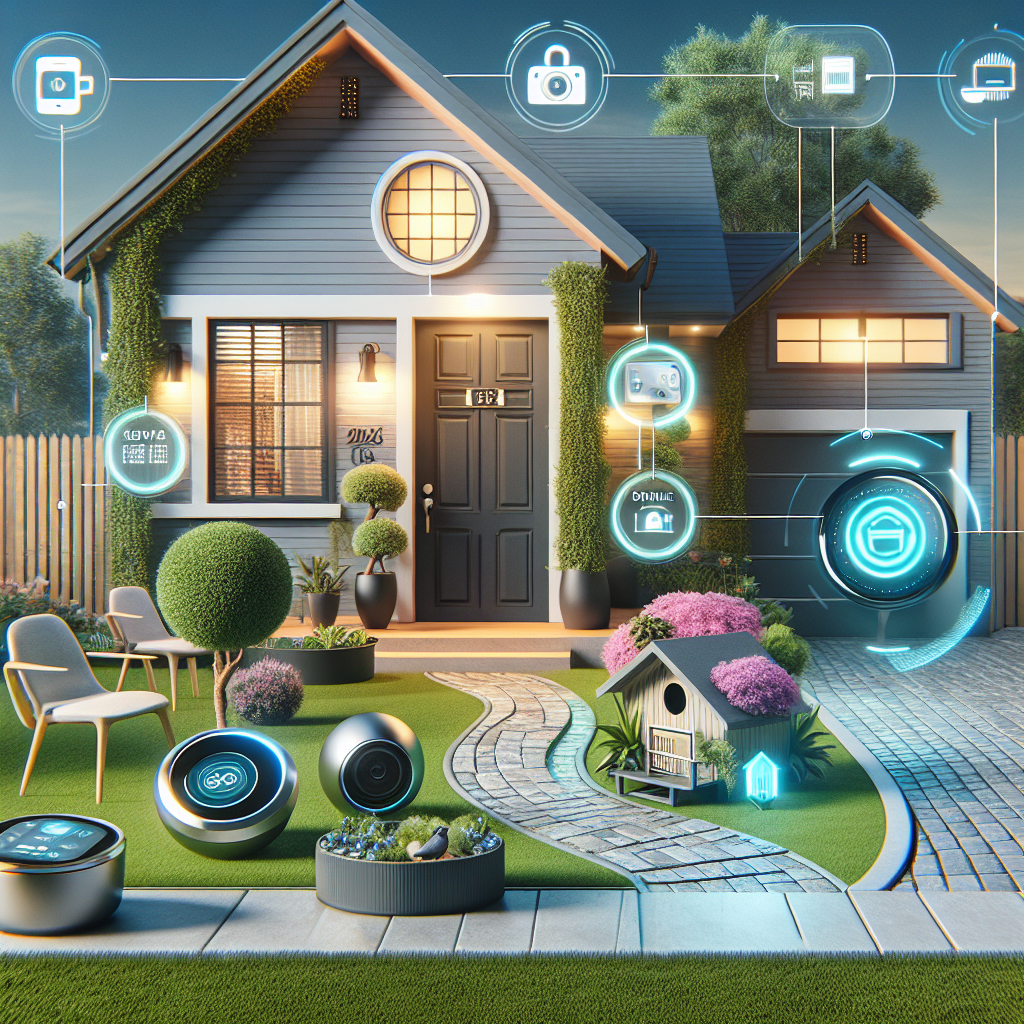
Spring has a funny way of turning all of us into unpaid exterior designers. The sun stays up later, the sidewalks fill with strollers and dog walkers, and suddenly you notice that your front porch light makes your home look like a convenience store at 2 a.m. Meanwhile, the neighbor across the street has warm bistro lighting, a tidy entryway, and—somehow—never seems to fumble with keys.
That’s the context for a timely piece from WIRED—“The Best Smart Home Accessories to Boost Your Curb Appeal (2026)”—written by Nena Farrell and published on April 18, 2026. citeturn1view0 Farrell’s core point is refreshingly human: outdoor smart home gear doesn’t have to be a plastic, blinking eyesore. You can add convenience and automation while keeping the “front-of-house” aesthetic intact.
This article is my expanded, reported take—built on Farrell’s recommendations, plus broader industry context, security guidance, and a few hard-learned smart-home lessons (some of which I paid for with my own weekends). I’ll link back to the original WIRED source throughout, name the products she highlighted, and add what matters most in 2026: interoperability (hello, Matter), network reliability (hello, Thread and Wi‑Fi dead zones), and cybersecurity labeling that’s finally starting to show up on retail boxes.
Why curb appeal is suddenly a smart-home battleground
Curb appeal used to mean paint, shrubs, and a front door that didn’t look like it lost a fight with a lawnmower. In 2026, it also means the tech layer—and whether that layer looks intentional or accidental.
There are two big forces at play:
- Exterior projects deliver outsized perceived value. The National Association of Realtors (NAR) notes that among REALTORS®, 92% have suggested sellers improve curb appeal before listing a home. citeturn5search6 Even if you’re not selling, that stat captures a reality: first impressions matter, and the exterior is where those impressions happen.
- Smart-home gear moved outside—and got more visible. Doorbells with cameras, smart locks, smart garage controllers, outdoor plugs, and permanent lights are no longer niche. They’re normal. Which means ugly choices stand out more than ever.
The trick is to make the technology feel like part of the home, not a “tech demo” bolted onto it. WIRED’s guide focuses on that exact idea, recommending devices that don’t scream gadget from the street. citeturn1view0
The three rules of outdoor smart gear: weather, Wi‑Fi, and “don’t make it weird”
Before we get into specific products, here are three rules I wish every smart-home buyer got printed on the receipt in large type.
1) Outdoor-rated means more than “I’ll put it under the eaves”
If it’s outside, buy the version that’s meant to be outside. That means looking for an IP rating, UV resistance, and realistic temperature tolerance. For example, the Cync Outdoor Smart Plug that WIRED mentions is documented as IP64 in its specifications. citeturn4search5 The difference between “rated” and “probably fine” is the difference between a calm summer and a troubleshooting session in a thunderstorm.
2) Your front yard is a wireless torture chamber
Brick, stucco with wire mesh, metal doors, insulated garages, and that one corner where your router signal goes to die—outdoors magnifies weak networks. In WIRED’s article, Farrell even notes that an integrated camera in her smart garage opener didn’t work great due to distance from the router. citeturn1view0 That’s not a brand-specific flaw; it’s physics and building materials.
In 2026, the practical fix is usually one of these:
- Add a mesh Wi‑Fi node closer to the garage or entryway.
- Prefer Thread-based devices for low-power gear where possible (locks, sensors, some shades), because Thread forms a mesh network designed for smart home devices. citeturn5search3
- Run Ethernet where it’s cheap and easy (for a hub, or a Wi‑Fi access point).
3) Invisible is a feature
There’s a difference between “smart home” and “smart home showroom.” If your curb appeal goal is to keep the façade clean, you’ll want devices that either look like traditional hardware or tuck the smarts inside. That’s why retrofit locks and discreet deadbolt replacements are so compelling right now.
Discreet smart locks: the easiest curb-appeal win
The front door is the handshake. It’s the first physical interaction most people have with your home. So it’s a little ironic that many smart locks still look like a Bluetooth speaker stapled to your deadbolt.
Farrell’s top discreet-lock pick is the Level Lock Pro. citeturn1view0 The defining attribute isn’t just the feature list—it’s the stealth: from the outside, it can look like a conventional lock.
Level Lock Pro: a smart lock that doesn’t look like one
WIRED recommends the Level Lock Pro as a “discreet smart lock” that preserves the look of your existing hardware. citeturn1view0 Apple’s product listing for the Level Lock Pro highlights Apple Home Keys support and Bluetooth + Matter-over-Thread connectivity, plus door status detection. citeturn6search0
Why that matters for curb appeal:
- No chunky exterior keypad required (unless you want one). The door face stays clean.
- Tap-to-unlock (Home Key) is the opposite of fumbling with keys like you’re auditioning for a slapstick reboot.
- Matter-over-Thread suggests longer-term ecosystem flexibility (more on Matter in a moment).
One operational note: Farrell mentions you may want Level’s Wi‑Fi bridge if you want remote control away from home. citeturn1view0 That’s a common pattern with Thread/Bluetooth locks: local performance is great, but remote access typically requires a hub/bridge in the right ecosystem.
“Invisible swap” option: Yale Approach Lock
WIRED also calls out the idea of “invisible swaps”—products that add smarts without changing exterior hardware. citeturn2view0 One example is the Yale Approach Lock, which Farrell describes as replacing only the inner portion of the lock so you can keep your existing key and exterior look, optionally adding a keypad. citeturn2view0
Retrofit locks are especially attractive for curb appeal because:
- You don’t have to match finishes perfectly (brass that’s really “brass-ish,” etc.).
- You can keep historic or custom hardware intact.
- The street-facing side stays “normal,” which is exactly what many homeowners want.
Video doorbells: the “least ugly camera” problem
If you want smart-home security without turning your porch into a surveillance-themed craft project, the doorbell is where you feel the tradeoffs most. Video doorbells are inherently visible—there’s a lens involved—but design still varies wildly.
Google Nest Doorbell (Wired, 3rd Gen): slim, color-matched, still obviously a camera
Farrell’s “sleek doorbell” pick is the Google Nest Doorbell (Wired, 3rd Gen). citeturn1view0 Her argument is essentially: all video doorbells look like video doorbells, but this one is among the least offensive and comes in multiple finishes for better visual fit.
Third-party reporting has highlighted upgrades like improved zoom and field-of-view for the 3rd-gen model, along with Google’s push toward more AI features in the Home app experience. citeturn3news16 The curb-appeal angle is simple: a slimmer silhouette and better finish options help the doorbell look like a considered fixture rather than an afterthought.
A practical note from the trenches: if you’re replacing an older doorbell, confirm transformer compatibility and wiring condition. Doorbells are small devices, but the electricity in your walls is not interested in your aesthetic goals.
Outdoor lighting that doesn’t look like a carnival (unless you want it to)
Lighting is the fastest way to change how a home “reads” from the sidewalk at night. It’s also where smart-home brands can go full RGB fever dream. The goal for curb appeal isn’t to avoid color entirely—it’s to make it feel intentional.
Govee Outdoor Clear Bulb String Lights: bistro vibes with Matter support
WIRED recommends Govee Outdoor Clear Bulb String Lights as a stylish option with a contemporary design twist—and notes an important detail for 2026: Matter compatibility. citeturn1view0
Govee’s own product listing positions these as outdoor string lights designed for ambiance. citeturn3search2 Independent reviews have also emphasized that the “clear bulb” look delivers a more classic aesthetic than chunkier permanent-light systems, while still offering smart control via Matter (with the usual caveat that real-world smart-home setup experiences vary). citeturn3search1
Why these help curb appeal:
- Warm-white looks expensive. You can still do color for holidays, but warm-white is what you’ll leave on for normal humans.
- String lights soften hard architecture. Especially on porches, pergolas, and garage-adjacent patios.
- Matter reduces “app clutter.” If you’re trying to keep your smart home tidy, fewer one-off apps helps.
Cync PAR38 outdoor smart bulbs: the “upgrade what you already have” move
Farrell also recommends an outdoor-rated smart bulb route, specifically calling out Cync’s PAR38-style outdoor smart bulbs for porch/balcony floodlights—while warning (correctly) that not all smart bulbs are outdoor-rated and that PAR38 size can be too large for some fixtures. citeturn1view0
This is an underrated curb-appeal strategy because it keeps the exterior fixtures themselves unchanged. If you already have good-looking sconces or a classic porch lantern, you can keep the fixture and modernize the behavior:
- Scheduled dusk-to-midnight lighting
- Motion-triggered bright white for deliveries
- Seasonal colors without changing hardware
Think of it as “smart home, but make it invisible.”
The garage: the biggest door on your house deserves smarter control
In many US suburbs, the garage door is basically the house’s face. It’s huge. It’s prominent. And it’s the part that people leave open by accident while they’re inside, congratulating themselves for being organized.
Chamberlain myQ Smart Garage Controller: add smarts without replacing the opener
WIRED recommends Chamberlain options for remote garage control, including the myQ Smart Garage Controller as an add-on path, and a full opener with integrated camera as a more involved upgrade. citeturn1view0
Chamberlain’s product listing for Smart Garage Control emphasizes the core feature set most people actually want: monitor, open, and close via the myQ app, plus the ability to add a second door with an extra sensor. citeturn4search3
Curb-appeal angle? It’s not about looks—these devices live inside the garage. It’s about behavior: you can keep the exterior clean (no added keypad on the outside if you don’t want it) while gaining convenience and avoiding the “garage left open” look that screams we’re not home, enjoy the bicycles.
Video keypads and cameras: great idea, network reality check
WIRED mentions the idea of adding a video keypad that can function like a garage-access doorbell. citeturn1view0 Chamberlain sells a myQ Smart Garage Video Keypad that’s positioned as a way to see and control who opens the garage, and it lists compatibility with major opener brands installed after 1993 that use photoelectric sensors (with brand constraints). citeturn4search0
But: anything with a camera increases your dependency on Wi‑Fi quality and power considerations. Farrell’s own experience with an integrated camera suffering due to router distance is a useful reminder. citeturn1view0 If you’re thinking about a camera-first garage setup, treat it like a mini IT project: confirm coverage, possibly add an access point, and plan for firmware updates and battery maintenance if the device isn’t hardwired.
Smart shades and window treatments: curb appeal’s quiet power move
Shades sound like an interior concern, but they influence how your home looks from the street, particularly in the late afternoon and early evening. Uniform window treatments can make a façade feel cohesive—and automated shading also helps with comfort and energy management.
SmartWings motorized roller shades: customization plus smart-home support
WIRED recommends SmartWings Motorized Roller Shades as a smart-shades option that can help with sun-exposed fronts of homes, and it also mentions Lutron Caseta Smart Shades for a more upgraded look. citeturn2view0
SmartWings has been notable in the broader ecosystem because it offers motors that can speak different smart-home “languages.” Reviews and product documentation indicate Matter-over-Thread motor options exist, which is a meaningful future-proofing signal for many smart-home builders. citeturn6search2turn6search5
Curb-appeal benefits include:
- Consistent “street-facing” privacy. You can close west-facing or street-facing shades automatically during peak visibility hours.
- Uniform presentation. Instead of half the front windows open, half closed, and one doing whatever it wants.
- Less heat gain. Particularly for west-facing glass that turns a living room into a solar oven (a problem WIRED explicitly notes). citeturn2view0
Lutron Caseta: the premium reliability argument
WIRED cites Lutron Caseta shades as an option if you want a more upgraded look. citeturn2view0 Lutron’s broader reputation in smart homes has long been tied to reliability and “it just works” installations—often a better match for people who want the smarts but not the hobby.
If your curb appeal plan includes “never talk about the smart shades again after installation,” you’re likely thinking in the right direction.
The surprisingly delightful curb-appeal gadget: a smart birdhouse
Most smart-home devices are either about security, convenience, or energy savings. A smart birdhouse is about something rarer: joy. It’s also a clever curb-appeal play because it’s an aesthetic object first and a gadget second.
Birdfy Nest Duo: dual cameras, solar power, and a front-yard conversation starter
WIRED recommends the Birdfy Nest Duo, describing it as a slim, attractive nesting box with two solar-powered cameras—one aimed at the entrance and one inside—plus features like predator guards and a remote control for camera reset/recharge without disturbing birds. citeturn1view0
Birdfy’s support documentation positions the Nest Duo as a dual-camera smart birdhouse. citeturn3search3 Retail listings and product descriptions further reinforce the “dual view + solar power” concept. citeturn3search0
From a curb appeal perspective, this is the opposite of a black plastic box with a blinking IR sensor. It looks like a yard feature. And in a world where cameras can feel a bit… tense, a birdhouse camera is almost charmingly wholesome.
“Invisible swaps”: the curb-appeal philosophy that scales
One of the strongest ideas in Farrell’s WIRED guide is the concept of “invisible swaps”—smart upgrades that don’t change your home’s visible exterior. citeturn2view0
In addition to the Yale Approach Lock, WIRED mentions the Cync Outdoor Smart Plug as a way to make exterior lighting smart while keeping the plug hidden at the outlet (depending on placement). citeturn2view0
This philosophy scales nicely because it helps avoid the common smart-home trap: buying a bunch of visibly different gadgets that fight each other aesthetically.
If you’re trying to boost curb appeal with smart tech, prioritize:
- Retrofitting where possible (bulbs, inner-lock swaps, controllers)
- Matching finishes (or keeping existing finishes)
- Hiding what can be hidden (plugs, bridges, controllers)
Matter, Thread, and the 2026 smart-home reality check
In 2026, “works with my phone” isn’t enough. The bigger question is: will it still work when you switch phones, change assistants, or move into a different platform? That’s where Matter and Thread come in.
Thread: the mesh network built for low-power devices
Thread is a low-power, IP-based mesh networking protocol designed for smart homes. citeturn5search3 In practical terms, Thread helps battery-powered or low-bandwidth devices (locks, sensors) stay responsive and avoid some of the “Wi‑Fi everything” pain.
WIRED has also explained Thread’s role as one of Matter’s underlying technologies. citeturn5search0
Matter: fewer ecosystems, more interoperability (in theory, increasingly in practice)
Matter is the cross-platform smart-home standard intended to improve interoperability between major ecosystems. In the real world, Matter has been incremental—more “boring plumbing upgrade” than “instant utopia”—but in 2026 it’s increasingly relevant because it shifts purchasing strategy from “pick a walled garden” to “buy compatible devices and keep your options open.”
We’re even seeing coverage of newer Matter releases expanding device categories and capabilities—like camera support in Matter 1.5, as reported by consumer tech outlets. citeturn5news13
For curb-appeal smart gear, Matter is most useful in two ways:
- It reduces app sprawl for lights and accessories that might otherwise require a dedicated vendor app forever.
- It makes “design-first” choices safer. If you’re buying a device because it looks good on your home, you want to know you’re not locking yourself into a dead ecosystem.
Security and privacy: curb appeal shouldn’t come with a side of risk
Any device that touches your front door, your cameras, or your garage is part of your security posture whether you intended it or not. In 2026, the good news is that the US is pushing harder on consumer IoT cybersecurity baselines.
Cybersecurity labeling is becoming a thing (finally)
NIST has been publishing work on consumer IoT cybersecurity and criteria for labeling programs for years. citeturn6search1 In 2025, the Associated Press reported on the federal rollout of a consumer labeling system (the Cyber Trust Mark initiative) meant to help people choose devices less vulnerable to hacking. citeturn6news14
While labeling won’t magically make every gadget secure, it’s a step toward normalizing expectations like:
- Unique and strong default credentials
- Clear support and update policies
- Secure communication practices
My baseline checklist for exterior smart devices
If you’re upgrading curb appeal with smart home gear, this is the checklist I’d use for anything on the exterior:
- Update policy: Does the company have a track record of security updates?
- Local control options: Can it function locally if the cloud hiccups?
- Two-factor authentication: Available for the account that controls the device?
- Network segmentation: Can you put IoT devices on a guest/VLAN network?
- Minimal data exposure: For cameras, what’s stored, where, and for how long?
And yes: it’s okay if you don’t want to think about any of this. But then you should choose products and ecosystems that reduce the thinking required—ideally those with strong default security practices and clear labeling.
Practical curb-appeal “recipes” you can steal
To make this useful beyond product names, here are a few “recipes” that combine the WIRED picks with a curb-appeal goal. Consider them starter builds.
Recipe 1: The stealth upgrade (you want smart, but you don’t want to see smart)
- Lock: Level Lock Pro (or a retrofit like Yale Approach Lock)
- Lighting: Smart outdoor bulbs in existing fixtures (like PAR38 floods where appropriate)
- Control: One outdoor smart plug for seasonal or patio lighting
This keeps the visual design mostly unchanged while adding automation.
Recipe 2: The “welcome home” porch (warm, consistent lighting, no hassle)
- String lights: Govee Outdoor Clear Bulb String Lights for warm ambiance
- Bulbs: Smart porch bulbs scheduled for dusk-to-bedtime
- Door access: Smart lock with Home Key or similar quick entry
The goal here is less “look at my tech” and more “this porch looks like people live well here.”
Recipe 3: The garage-forward house (because the garage is the façade)
- Garage: myQ Smart Garage Controller (or integrated opener upgrade)
- Entry consistency: Discreet lock so the front door doesn’t look mismatched
- Lighting: Smart floods timed for evening, brighter on motion
This is the suburban reality build: you want the big door to behave.
What WIRED got right—and what to add in 2026
WIRED’s guide is doing something important: treating design as a first-class requirement. citeturn1view0 For years, smart-home buying guides acted like aesthetics were optional, which is a bold stance for devices installed on the front of a house. Farrell’s framing makes the conversation more realistic: smart gear should match your home, not fight it.
What I’d add for 2026 buyers is that design-forward hardware should be paired with design-forward architecture:
- Pick an ecosystem strategy (Apple Home, Google Home, Alexa, SmartThings, Home Assistant)
- Prefer standards like Matter where it genuinely reduces lock-in
- Plan for coverage: add a mesh node or access point before you blame the device
- Use cybersecurity labeling and vendor update history as part of “quality”
Because the real curb-appeal flex isn’t the fanciest doorbell. It’s a home that looks good, works smoothly, and doesn’t require you to stand on the porch at night whispering “why won’t you pair” into the void.
Sources
- WIRED: The Best Smart Home Accessories to Boost Your Curb Appeal (2026) (Nena Farrell, Apr 18, 2026)
- Apple: Level Lock Pro (Matter) with Apple Home Keys Support
- Thread Group: Thread in Homes (Smart Home)
- WIRED: What Is Thread? Matter’s Smart Home Network Protocol, Explained
- National Association of Realtors: Remodeling Impact Report—Outdoor Features (Apr 9, 2025)
- Chamberlain: Smart Garage Control
- Chamberlain: myQ Smart Garage Video Keypad
- Manuals+: Cync Outdoor Plug Specifications (IP64)
- Birdfy Help Center: Birdfy Nest Duo
- Govee US: Outdoor Clear Bulb String Lights
- Matter Alpha: Govee Outdoor Clear Bulb String Lights review
- NIST: Consumer IoT Cybersecurity
- Associated Press: New labels will help people pick devices less at risk of hacking (Jan 7, 2025)
- Tom’s Guide: Matter 1.5 update launches… including security camera support (Nov 20, 2025)
Bas Dorland, Technology Journalist & Founder of dorland.org